I wrote this article in English, but Arabic translation is here, Also Spanish and French one
I grew up reading science fiction — in Arabic — from an early age, eventually becoming a science fiction writer myself. However, it wasn’t until I migrated to the U.S. six years ago that I was introduced to Frank Herbert. Although most of the science fiction classics of his time were translated into Arabic, Herbert’s works didn’t make it into Arabic until six years ago. Could this delay have been due to the controversial nature of his intertwining Islamic mythology with Arabic terms? Or was it the high cost of acquiring translation rights for a bestselling novel?
Dune as Sunnie’s sword
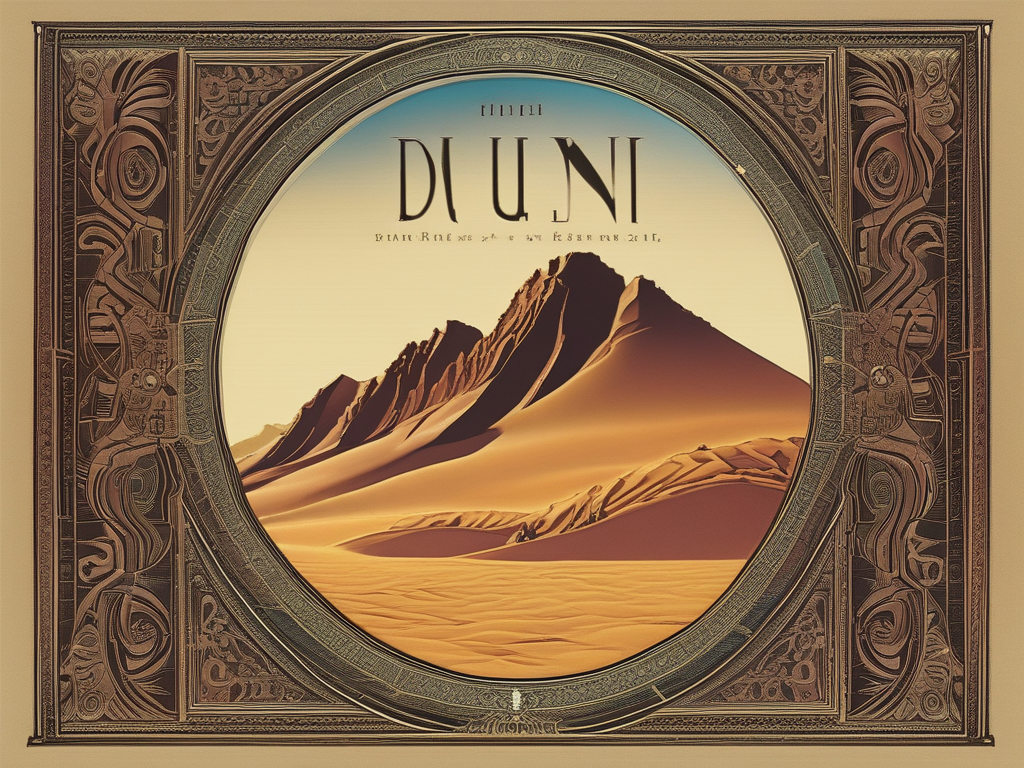
I recently read the first three books of Dune in English and watched the film adaptations. When I looked for the Arabic translations, I found two versions released in recent years. One is a paperback with the same cover as the English edition, translated by Nader Osama and published in 2021 by Kalemat Publishing. The other is available only online, translated by Mohamed Salama El-Masry and published by Makhatot in 2018. This version is accessible on Amazon Kindle and for free through the Internet Archive and several other online forums.
Intrigued, I downloaded this Arabic translation. The translator’s introduction examines Frank Herbert’s legacy, highlighting how his style and writing differ from American authors such as Isaac Asimov and Ray Bradbury, who were introduced to Arabic readers decades ago. El-Masry also discusses the technical choices he had to make, particularly regarding Herbert’s use of Arabic and quasi-Arabic terms. The introduction concludes with the translator’s heartfelt note of gratitude to his mother, who cared for him for four months and endured his discussions about the translation’s editorial details while he worked on rendering the novel’s 501 pages into Arabic.

I searched the internet for this translator but couldn’t find much. I asked friends, translators, and publishers if they knew him or had contact with him but received no answer. Finally, I stumbled upon a rabbit hole on Reddit where he was answering questions from Dune fans, especially Americans who were excited about an Arabic translation of Dune. His profile on Reddit showed a little activity, though I found several old posts where he expressed concerns about the other Dune translations, accusing them of using terms borrowed from his translation without mentioning him. I contacted Salama through Reddit, asking him all my questions. To my surprise, he began our conversation by saying, “A quick glance at our comments reveals that we have very different worldviews 🙂 I’m practically a Salafist, with ‘reactionary,’ conservative, and anti-progressive attitudes/opinions, while you are obviously too liberal (& too political) for my taste.”
Later in the conversation, when I asked him why he chose to translate Dune, he explained that he had been reading about Shia history in North Africa, specifically how they employed deception to conquer and colonize Egypt. He found striking similarities between their methods and the techniques of the Bene Gesserit in Herbert’s novel. In his translation, he emphasizes this point, offering the Arabic reader his Salafist interpretation of Dune, explaining that in the novel, the Bene Gesserit are witches who conspire against everyone in their pursuit to fulfill a prophecy of bringing forth the Messiah.
This was a lot to digest. It was the first time I encountered someone describing the Fatimid rule of Egypt — they were the ones who built Cairo in 969 — as colonization. His choice of words revealed a perspective deeply rooted in Salafi, ultra-Sunni ideology, with a pronounced opposition to Shia beliefs. It seemed as though his translation was part of a broader endeavor to combat Shia doctrines, aiming to expose their purportedly dubious techniques and heretical teachings.
Salama explained that the concept of the Mahdi, essential in Dune, is fundamentally a Shia concept. In the novel, the Mahdi (Paul Atreides) leads the Fremen to defeat the Harkonnens and the Empire but ultimately becomes a dictator, causing universal suffering. Salama’s translation, freely available on Internet Archive, includes a lengthy introduction, several annexes, and numerous comments. For instance, he adds a footnote suggesting that a dialogue between two characters was inspired by a specific line in the Quran.
In our Reddit exchanges, Salama told me he was paid for his translation by Makhtot Publishing House, which bought the digital rights from Herbert’s estate. For years, it was sold on Amazon Kindle for $2. However, he wasn’t satisfied with the publisher’s decision to cut some of his footnotes and annexes. Consequently, he published a full, uncut edition online for free, followed by an annex detailing how other translations had copied his work.
Many articles and literary studies have been published about Dune, analyzing it through the lens of Orientalism and post-colonial theory. Most of these studies were written by Western scholars and writers, who often view Shia and Sunni as a single entity representing the “Orient.” Their interpretations are captivated by the dramatic narrative of colonization and resistance, oppression and the oppressed, reflecting the American empire’s post-WWII view of the Gulf region. However, works of art have multiple lives and faces, and some might not recognize each other. How would a subaltern from the world of “desert” interpret the novel? And how would a work like Dune be influenced by the new Arab Gulf identity that is shaping the current Arab world?
…. Continue reading the full article here: Dune in 2024: A World Beyond Saving – The Markaz Review
Leave a Reply